
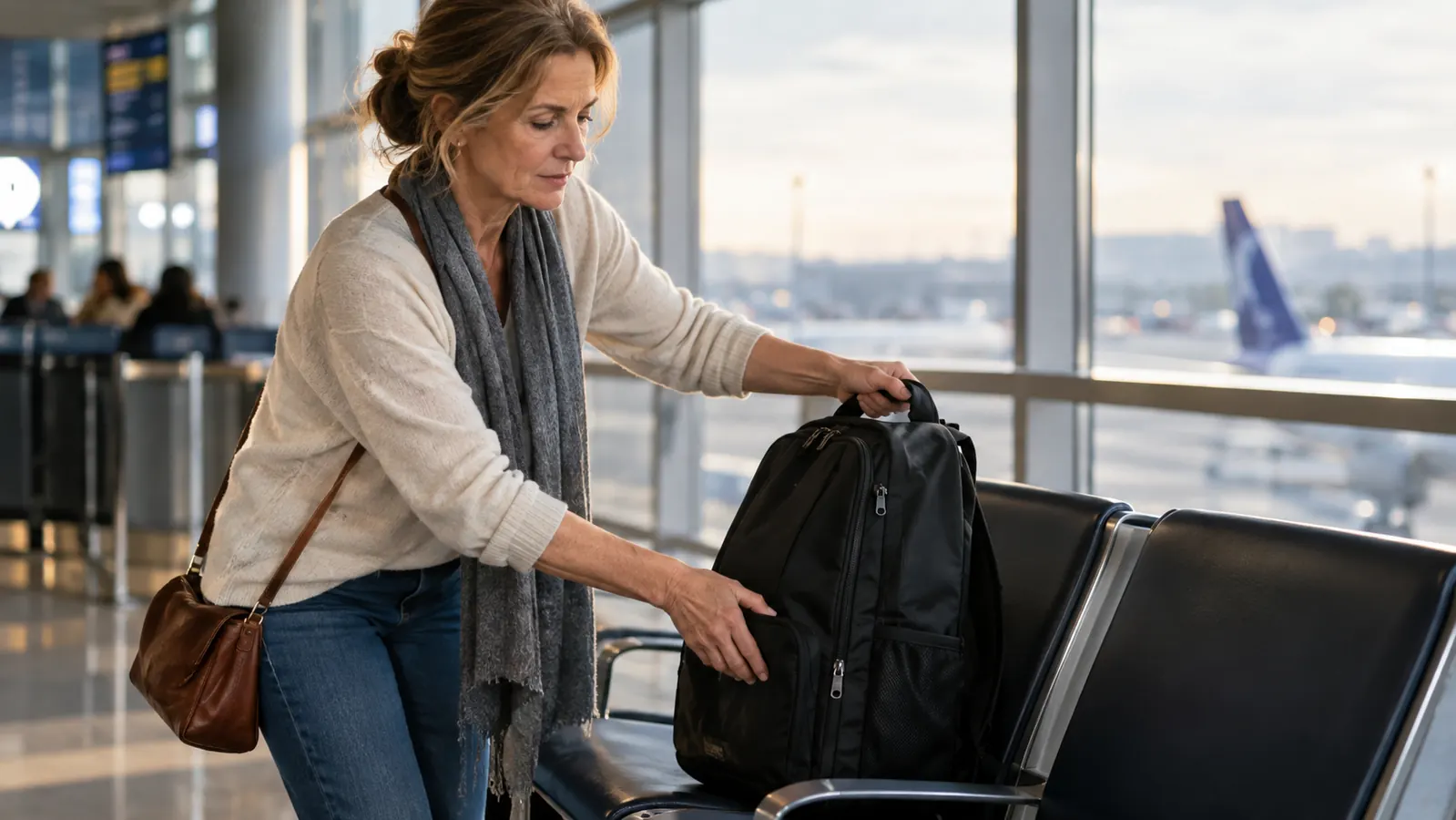
I have a confession: I used to be a roller-bag person. For years I dragged a rolling carry-on through Denver International, one hand on the handle, the other gripping the armrest of every moving walkway because my left knee does not like sudden stops. When I retired from teaching middle-school geography, I told myself the next chapter would involve more flights and less limping. So this season I switched to the Taygeer carry-on travel backpack, and I have now taken it on twelve flights, three long weekends, and a handful of day trips.
This is not a review written after one airport test. This is what I learned after a full season of using it, including a red-eye where I slept on it, a regional jet where the overhead bin was smaller than my patience, and a rainy day in Chicago where the backpack spent more time on wet sidewalks than on my back.
The Quick Verdict
The Taygeer carry-on travel backpack is the rare bag that fits under a seat, holds a surprising amount, and still looks neat after months of abuse. It is not perfect, but for my kind of travel it has replaced my roller bag completely.
Amazon Check Today's Price →A carry-on backpack that actually fits under the seat in front of you
After a season of flights, the Taygeer travel backpack is the one I keep reaching for. It fits the personal-item sizer on the airlines I fly, holds a week of clothes when packed carefully, and has survived being shoved, dropped, and overstuffed.
Amazon Check Today's Price on Amazon →How I've Used It
I bought the Taygeer travel backpack in early spring, right before a trip to visit our older daughter in Portland. My husband Mark, who packs too little for every trip, laughed when he saw me transferring my usual roller-bag contents into a backpack. He stopped laughing when I fit three days of clothes, a laptop, a paperback, and my overstuffed toiletry kit into the main compartment and still had room for a scarf.
Since then I have used it on a red-eye to Boston, a long weekend in Chicago, a wedding in Santa Fe, and a week-long trip to Vancouver where I checked a bag for the first time in years. I have also used it as my everyday day-trip bag for museum visits, train rides, and one very long layover at O'Hare. The backpack has been under seats, in overhead bins, on wet sidewalks, and on the floor of a crowded Amtrak car. It has held up better than I expected, and I have learned exactly where it falls short.
For context, I am 54, I have a bad left knee, and I fly out of Denver International five or six times a year. I am not a ultralight packer, but I have learned to be a careful one. The Taygeer backpack is not a magic bag that makes packing effortless. It is a well-made bag that rewards a little planning.
What Fits Inside: The Real Capacity Test
The listing says the Taygeer travel backpack is 40 liters, which sounds like a lot until you realize that a 40-liter backpack is not the same as a 40-liter suitcase. The difference is organization. The main compartment opens like a clamshell, which is the single biggest reason I can pack a week of clothes into it. When a bag opens flat, you can stack items instead of rolling them into a dark hole and hoping for the best.
On my Portland trip I packed: three pairs of pants, four shirts, a light sweater, a pair of walking shoes, a toiletry kit, a laptop, a tablet, a book, and a crossbody purse. Everything fit, and the backpack still slid under the seat on the flight home. On the Vancouver trip, where I checked a bag, I used the Taygeer as my personal item and packed a change of clothes, my laptop, a camera, snacks, and a neck pillow. It fit under the seat without me having to push it with my foot.
The one thing I have to be honest about: the 40-liter claim assumes you are packing soft items. If you pack a lot of shoes or a bulky toiletry bag, you will use the space faster than you expect. I learned to put shoes at the bottom, flat, with the soles facing the back panel. That one trick made more difference than any packing cube I have tried.
How It Feels to Carry: The Knee Test
Here is where the Taygeer travel backpack surprised me most. I expected a backpack this size to hurt my shoulders after an hour. Instead, the padded straps and the sternum strap distributed the weight well enough that I walked from the train station to our hotel in Chicago, about twenty minutes with the bag fully loaded, and my shoulders felt fine. My knee, which is the real test, did not complain once. The weight sits high and close to your back, which is exactly what you want when you are carrying a load through an airport.
The backpack also has a luggage pass-through strap on the back, which means you can slide it over the handle of a rolling suitcase. I used this on the Vancouver trip, and it turned the backpack into a glorified suitcase topper. That feature alone is worth mentioning because it means you do not have to choose between a backpack and a roller. You can bring both and let the roller do the heavy lifting when your knee is having a bad day.
The one ergonomic complaint I have is the lack of a hip belt. For a bag this size, a hip belt would take a lot of weight off the shoulders on long walking days. The Taygeer does not have one, and I noticed it on a day trip where I carried the bag for four hours through the Art Institute of Chicago. It was not unbearable, but by the end of the day I was ready to set it down. If you plan to use this as a hiking-style backpack, look elsewhere. If you plan to use it as a travel bag that you carry from curb to gate to hotel, it is more than comfortable enough.
The knee test is really about how the weight sits. A rolling bag spares my knee on long concourses, but stairs and uneven sidewalks are a different story. With the Taygeer backpack on both shoulders and the straps snugged up, the weight sits close to my back and I keep both hands free for railings. On a stretch of steep steps in Lisbon that felt much safer than dragging a suitcase behind me. I do not carry it fully packed for hours, but for the walk from the car to the gate, or from the train to the hotel, it has been easy on me.
The TSA and Airline Test: Under Every Seat, So Far
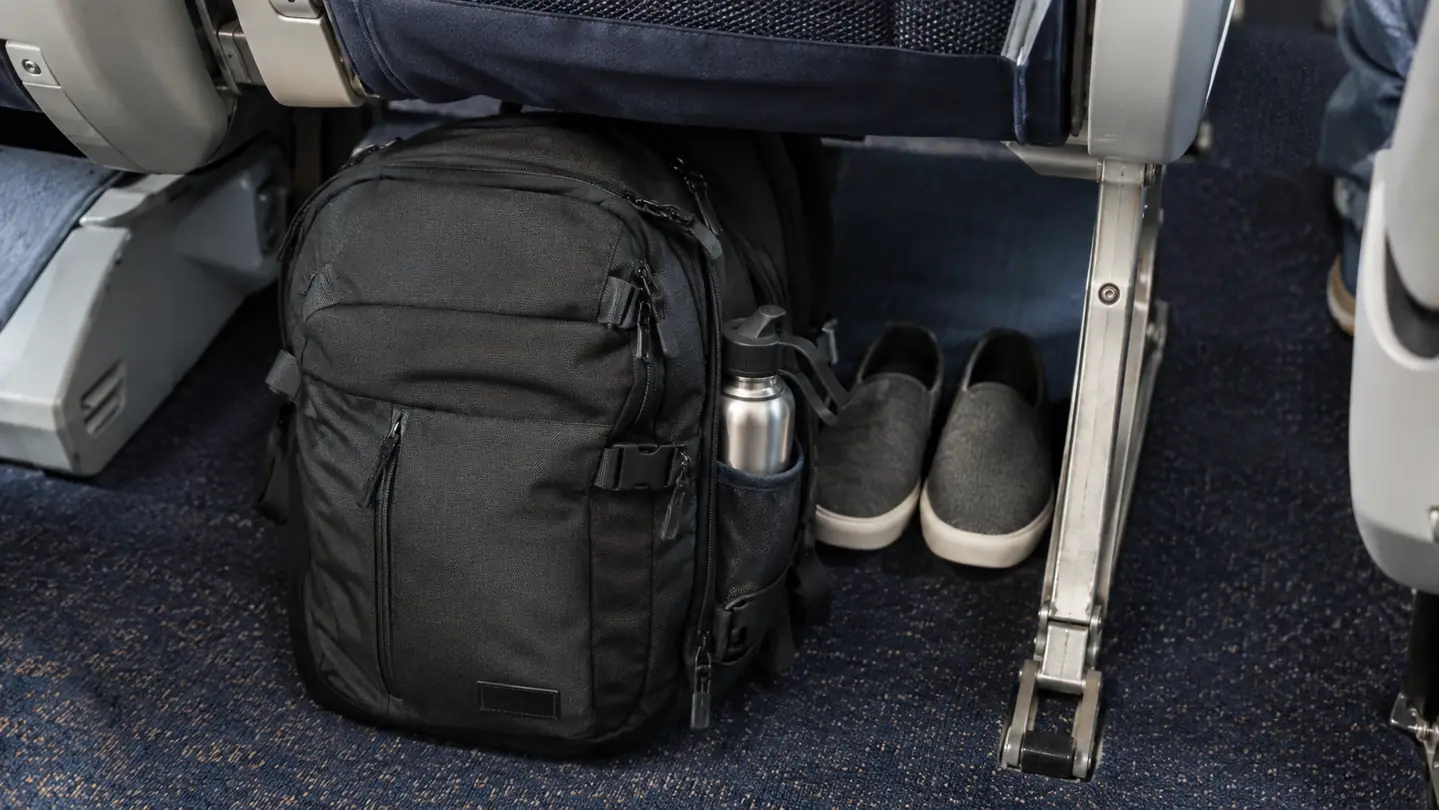
I have flown United, Southwest, and American with this backpack, and it has fit under every seat I have tried. The key measurement is the height. The Taygeer is designed to meet the personal-item size limits for most US airlines, and in practice it slides under a standard seat with room to spare. I have never had to gate-check it, and I have never been asked to put it in the sizer, though I have watched other passengers with larger bags get stopped.
The backpack also has a TSA-friendly laptop compartment that opens flat. On the Portland trip, I unzipped it, pulled out my laptop, and had it back in the bag before the person behind me had even found their boarding pass. The compartment is padded on all sides, which matters to me because I have broken a laptop screen before by shoving it into a bag that was not designed for one.
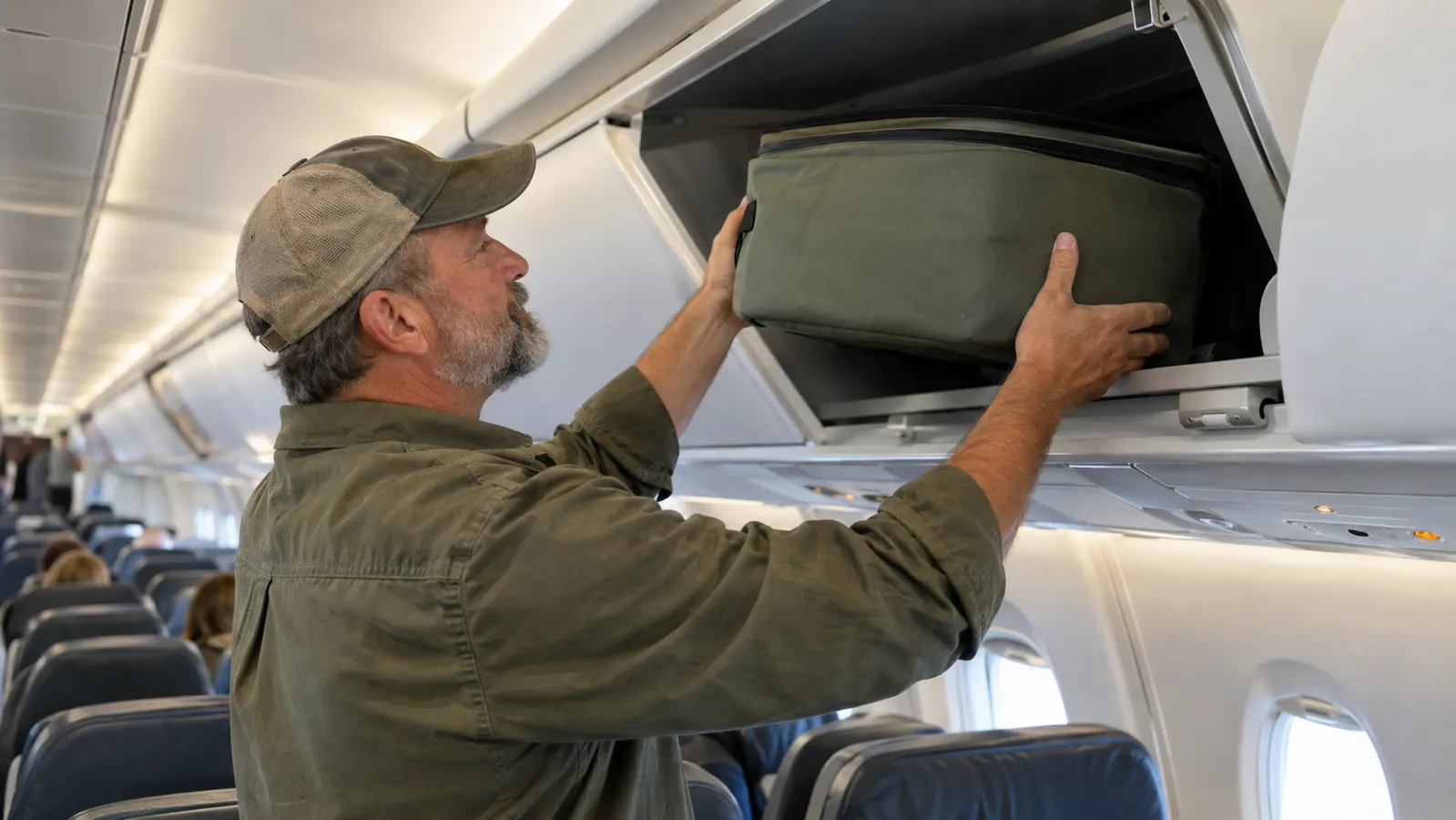
One note about the overhead bin test: on a regional jet, the overhead bins are smaller, and the Taygeer fits but only if you place it sideways. I learned this on the Boston red-eye, where I watched a flight attendant gently rearrange my bag so it would close. It fit, but it was a close thing. If you are flying on a small regional jet, plan to put the backpack under the seat instead, where it fits without any negotiation.
The Taygeer has fit under every seat I have tried, and I have never once had to gate-check it. For a traveler with a bad knee, that is the whole ballgame.
What Wore Well and What Did Not
After a season of use, the Taygeer travel backpack looks almost new. The fabric has resisted scuffs, the zippers still glide, and the stitching has held up even where I overstuffed the main compartment. I have washed the outside once with a damp cloth after a rainy day in Chicago, and it came clean without any fuss. The water bottle pocket on the side is deep enough that my bottle has never fallen out, even when I bent over to pick up my boarding pass.
The things that did not hold up as well are small but worth knowing. The key clip inside the front pocket is thin, and I stopped using it after a week because I was afraid it would bend. The zipper pulls are functional but not luxurious; they work fine, but they are the first thing I would replace if they broke. And the shoulder straps, while comfortable, do not have any kind of load-lifter adjustment at the top, which means you cannot fine-tune how the weight sits on your shoulders. None of these are dealbreakers, but they are the difference between a great bag and a perfect one.
I also want to be honest about the fabric. It is a polyester blend that feels sturdy, not flimsy, but it is not a waterproof fabric. The Taygeer handled a light rain in Chicago without letting anything inside get wet, but I would not trust it in a downpour. If you travel to rainy places, bring a pack cover or put your electronics in a dry bag inside. That is the kind of thing I wish someone had told me before I bought it.
What I Liked
- Fits under airline seats on every flight I tried, including regional jets
- Clamshell opening makes packing and unpacking genuinely easier
- Comfortable shoulder straps and sternum strap for a bag this size
- Luggage pass-through works well with a rolling suitcase
- Survived a full season of flights, trains, and rainy sidewalks without visible wear
- TSA-friendly laptop compartment opens flat and is well padded
Where It Falls Short
- No hip belt, so long walking days put all the weight on your shoulders
- Fabric is water-resistant, not waterproof; a downpour would soak it
- Key clip inside the front pocket feels thin and bendable
- 40-liter capacity assumes soft packing; bulky shoes eat space fast
- Zipper pulls are functional but not built for heavy abuse
Who This Is For
The Taygeer carry-on travel backpack is for the traveler who wants one bag that can do almost everything. It is for the person who is tired of wrestling a roller bag through a crowded airport, who wants their hands free for a coffee and a boarding pass, and who does not want to pay a checked-bag fee for a long weekend. It is for the traveler who flies a few times a year, packs carefully, and wants a bag that will still look presentable after a few seasons.
It is especially good for travelers with knee or back trouble, because the weight sits high and close to your back, and the luggage pass-through means you can pair it with a roller on bad days. My left knee has thanked me every time I have chosen the Taygeer over my old roller bag. If you are a carry-on-only convert, or you want to become one, this is a very easy bag to start with.
Who Should Skip It
If you are a one-bag minimalist who needs to fit two weeks of clothes into a single backpack, the Taygeer is probably not the bag for you. It is a generous personal item, but it is not a bottomless pit. If you pack heavy shoes, multiple electronics, or a full-size toiletry bag, you will run out of room faster than you expect.
If you plan to hike with your backpack, skip it. The lack of a hip belt and the lack of load-lifter straps mean the Taygeer is a travel bag, not a hiking pack. And if you regularly fly airlines with strict personal-item sizers, like some budget carriers, you should measure the bag against their specific limits before you buy. It has worked for me on United, Southwest, and American, but I cannot promise it will work on every airline in the world.
The bag I reach for every time I fly now
After a full season of flights and day trips, the Taygeer travel backpack has earned its place as my go-to carry-on. It fits under seats, holds a surprising amount, and has held up better than bags I have paid more for. If you are ready to leave the roller bag at home, this is a great place to start.
Amazon Check Today's Price on Amazon →