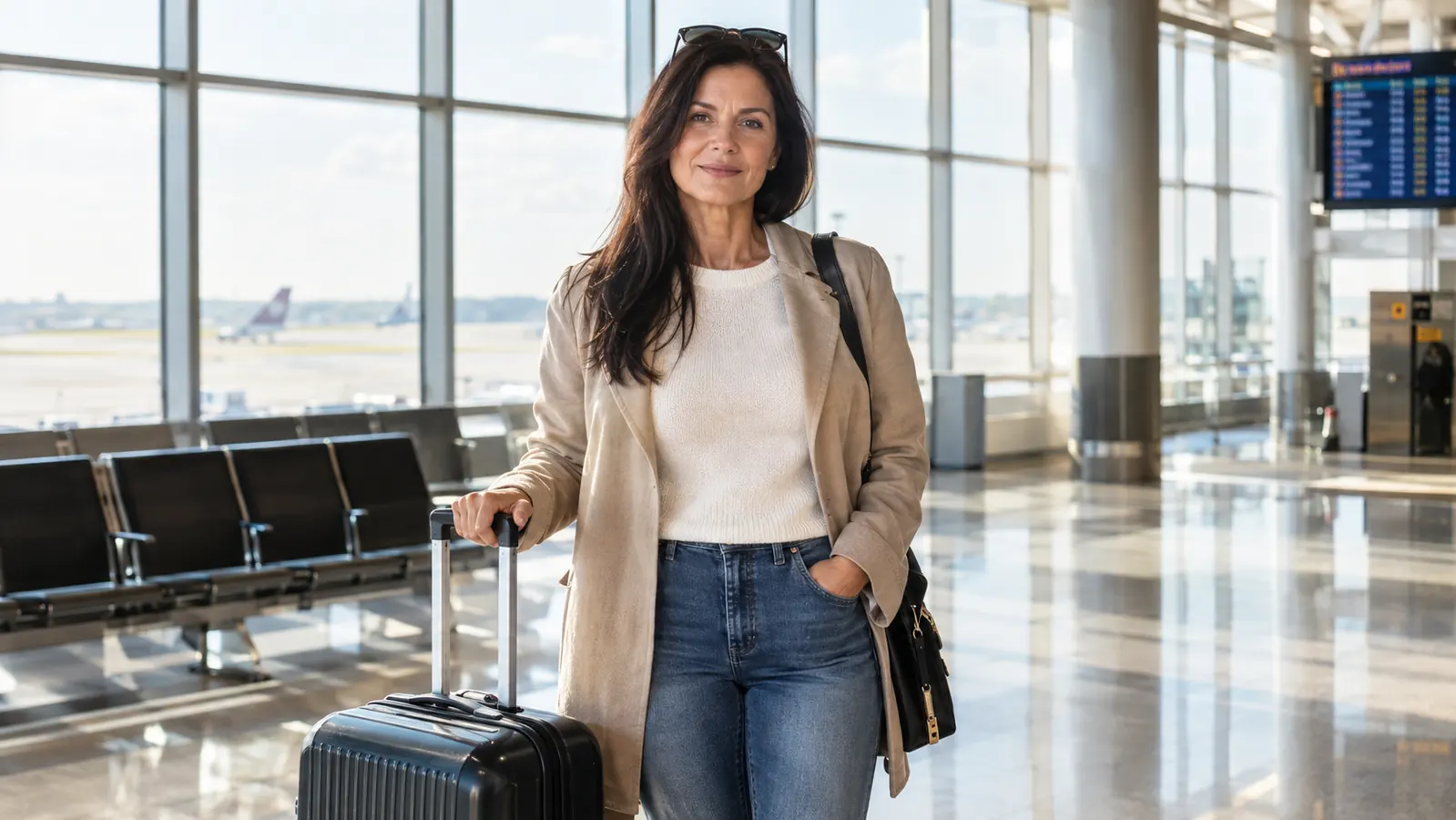
For years I was the traveler dragging a full-size checked bag through Denver International, one hand on the handle and the other gripping a carry-on that was somehow always overweight. My husband Mark, a retired electrician who packs too little, would sail through security while I sat on the floor trying to make a zipper meet. I finally gave myself a simple rule: any trip under a week, carry-on only. The suitcase that made the rule stick is the Samsonite Freeform hardside spinner, and this is how I actually use it.
None of this is about becoming a minimalist. I spent 28 years in a middle-school classroom telling students about places I had mostly only read about, so I naturally want to bring the whole world with me. What works is a system with clear limits, not willpower. The Samsonite Freeform helps because the four spinner wheels move in any direction, the handle sits at a comfortable height for my shoulder, and the hard shell keeps me honest about what fits inside.
Carry-on only starts with the right bag
The Samsonite Freeform hardside spinner has carried me through every carry-on-only trip of the past year, including a ten-day stretch in Italy. It holds a week of clothes, rolls smoothly over carpet and tile, and fits the overhead bin on every airline I have flown.
Amazon Check Today's Price on Amazon →Why Carry-On Only Is Worth It
I made the switch for practical reasons, not because I wanted to look like a seasoned traveler. My left knee has bothered me for years, and hauling a heavy checked bag through the parking garage, down the escalator, and across the terminal was the worst part of every trip. Carry-on only means I never stand at the baggage carousel, never worry about the airline losing my things, and never wait an extra half hour at the other end.
The other reason is simpler. I travel five or six times a year now that I am retired, and most of those trips are under a week. A carry-on is enough for that, full stop. The Samsonite Freeform made me realize the checked bag was never about needing more space. It was about not trusting myself to pack less.
The size rules took some getting used to. On my first trip with the Freeform, I worried the bag would not fit the smaller overhead bins on regional planes, so I measured it against the sizing box at the gate before boarding. It passed, and it has passed every time since. Knowing the bag fits takes the worry out of the whole trip.
Step 1: Choose one packing method and commit to it
The fastest way to fail at carry-on only is to change methods halfway through. I used to roll the first few shirts, fold the next few, then try to press everything flat with my palms while the suitcase sat open on the bed. That is how I ended up with a bag that closed only after I sat on it.
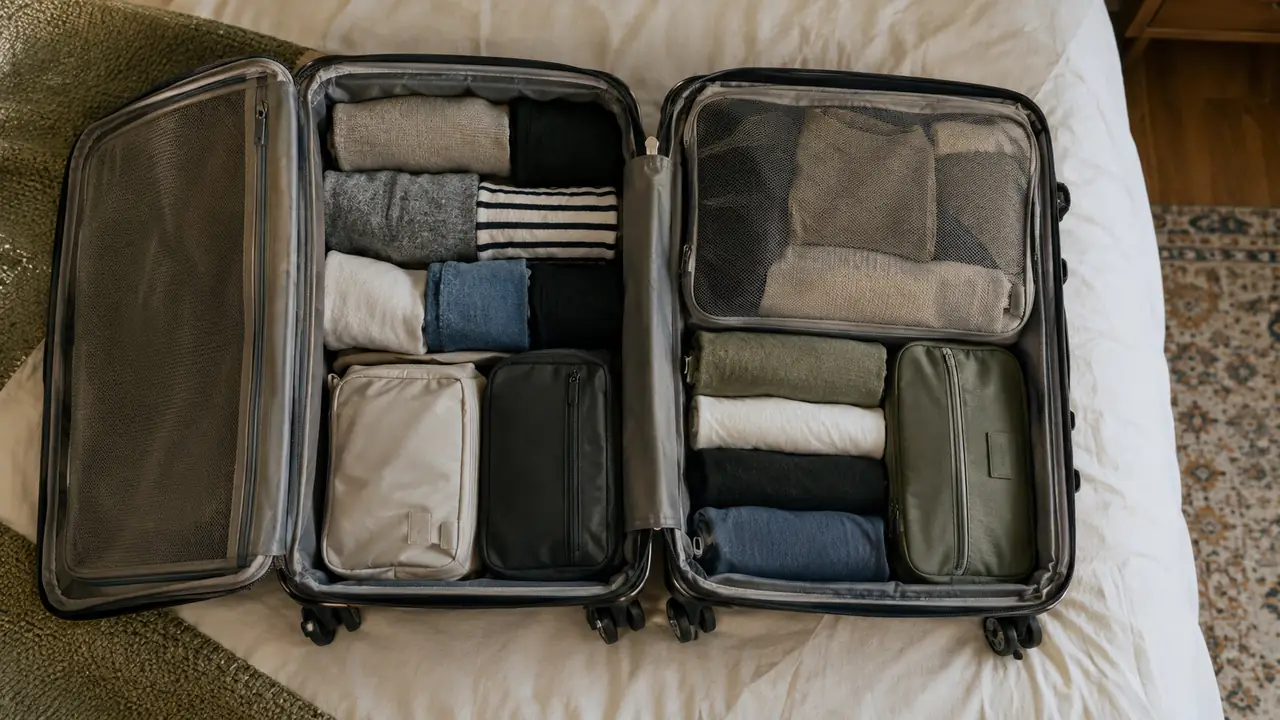
I roll everything now. Shirts, pants, even dresses roll smaller than they fold, and rolled clothes slide into the Samsonite Freeform without leaving air pockets. I group each outfit as I go, rolling the shirt and pants together so I can pull out one complete set without disturbing the rest of the bag.
If rolling does not feel natural to you, fold instead. The method matters less than doing the same thing every trip. Once you know exactly how much space each rolled bundle takes, you can look at a pile of clothes and know in seconds whether it fits.
Step 2: Plan outfits on paper before you touch the suitcase
Before I open the suitcase, I open a notebook and write out every day of the trip. Under each day I list what I will wear, including the shoes. This sounds like homework, and it is, but it stops the two worst packing mistakes: bringing five pairs of shoes for a four-day trip and bringing three jackets 'just in case.'
I build everything around two or three colors that go together, usually black, gray, and one accent color. That way every top works with every bottom and I can pack four outfits that feel like eight. Mark makes fun of my color chart, then borrows one of my shirts when he realizes he underpacked again.
When I plan this way, the Samsonite Freeform has room to spare. The bag is deeper than it looks, and a planned wardrobe uses maybe two-thirds of the space. The extra room means I can bring home a small souvenir without sitting on the suitcase to close it.
Step 3: Put the heavy things in first, on the wheel side
My left knee is not what it used to be, so how the suitcase carries weight matters to me as much as what I pack. The Samsonite Freeform has the wheels on one side, and I put my shoes and toiletries on that side, closest to the wheels. Heavy stuff low means the bag does not tip over when I let go of the handle, and it rolls straighter behind me.
I pack two pairs of shoes for a week, and they go in first, soles down. Then the toiletry bag, then the rolled clothes on top. The compression straps inside the Freeform hold everything in place, so nothing shifts around when the bag goes through the x-ray machine or gets tossed into an overhead bin.
Toiletries go in a clear liquids bag that I can grab without unpacking. At security I slide it out of the top of the suitcase, put it in the bin, and slide it back in on the other side. With the spinner wheels I can keep the suitcase upright the whole time, which is easier on my knee than lifting a bag onto the belt.
Step 4: Keep the total under 20 pounds
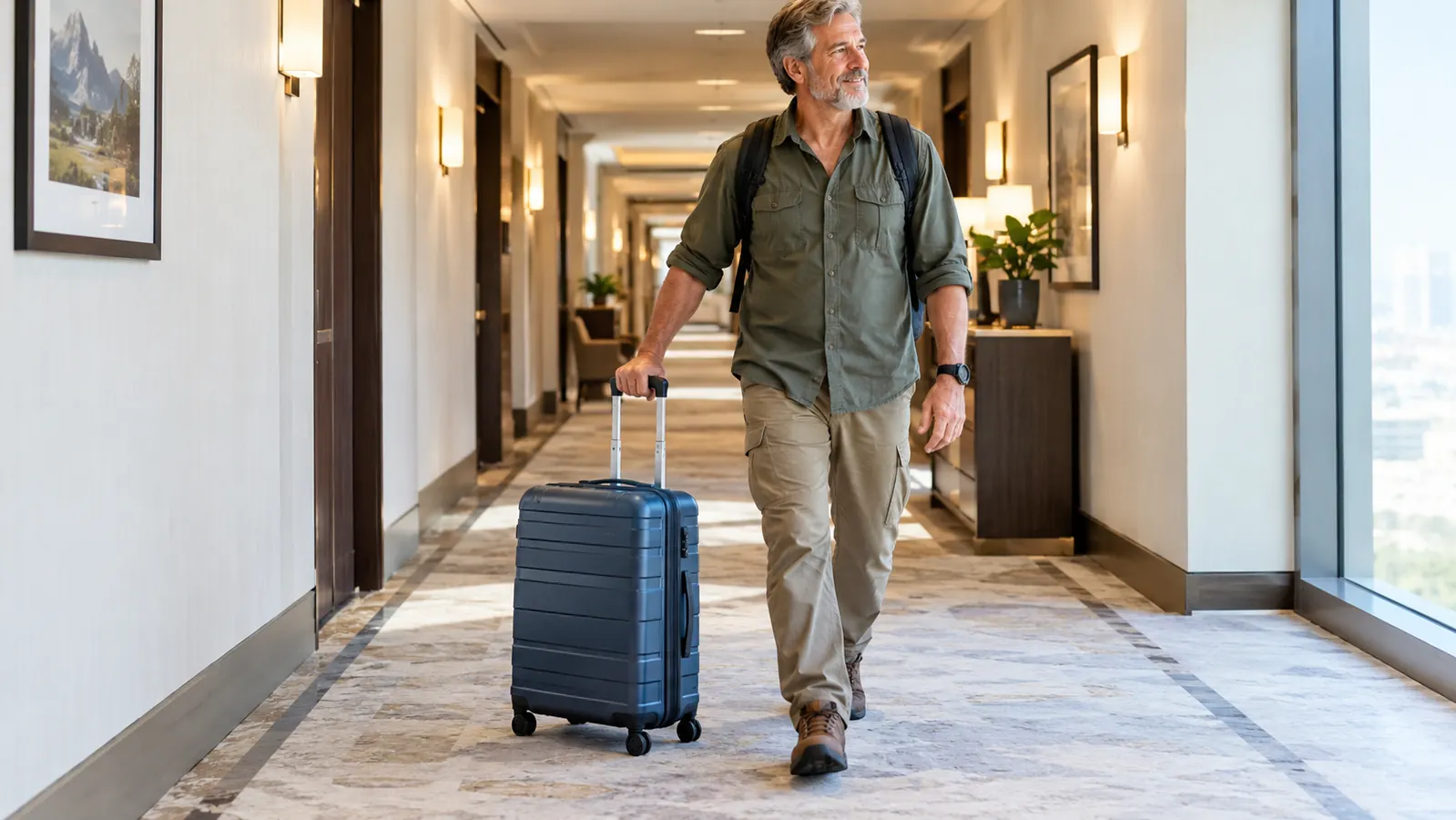
Most airlines in the United States do not weigh carry-on bags, but they do have size limits, and every airline has its own. The Samsonite Freeform is built to fit the standard overhead bin dimensions, which has kept me out of trouble on Delta, United, Southwest, and a few smaller regional carriers. Weight is the part I manage myself.
I keep a small luggage scale by the bedroom door and weigh the suitcase before I leave. My personal ceiling is 20 pounds, and that includes the suitcase itself. On my last trip, a week in the Pacific Northwest, the bag weighed 18 pounds, and I never once wished I had brought more.
If you are over your number, wear the heaviest things onto the plane. I have flown in my hiking boots with my tennis shoes in the bag, and my rain jacket tied around my waist. It looks a little odd at security, but it buys you the space and weight you need.
Step 5: Do a 15-minute repack the night before
No matter how carefully I pack, the bag always looks different by the night before the trip. I have added a book, taken out a sweater, and moved my chargers to the outside pocket. So I give myself fifteen minutes to open everything up and start over.
I take everything out, re-roll the clothes that came loose, and put it all back in the same order: shoes and toiletries on the wheel side, clothes on top, jacket last. Then I stand the Samsonite Freeform upright and give it a gentle shake. If nothing shifts, I am done. If it rattles, I find the empty spot and fill it with a rolled pair of socks.
This final repack is also when I check the zippers and the handle. The Freeform's handle extends smoothly and locks in place, and I have never had a zipper fail on this bag, but I check anyway because a broken zipper at 5 a.m. is the kind of start I do not need.
What Else Helps
A good suitcase only does half the work. The other half is what you put inside it, and a few small habits make the difference between a bag that works and a bag you fight.
Packing cubes keep me organized more than anything else. I use one cube for tops, one cube for bottoms, and one cube for underwear and socks, and the cubes keep the rolled bundles from unrolling during the flight. When I reach my hotel, I put the cubes straight into the dresser drawers and leave the suitcase empty in the closet.
I also keep a small crossbody bag for the plane instead of a big purse. It holds my passport, phone, glasses, and a book, and it fits under the seat without eating into the suitcase's overhead space. Mark calls it my 'go bag.' I call it the reason I never have to dig through the overhead bin mid-flight.
One more thing: I keep a small pouch in the outside pocket with earplugs, a pen, and a phone charger. It sounds minor, but those three items have saved me more times than I can count. When the pouch lives in the suitcase, I never have to hunt for a charger at midnight in a hotel room.
The Samsonite Freeform has been on twelve flights in the past year, and the wheels still roll like they did on day one. That is what carry-on only is really about: gear that keeps up with you.
What I Learned After a Year
The biggest surprise is that I do not miss the checked bag. I thought I would, especially on longer trips. But a week of clothes in a carry-on is plenty when you plan around it, and the freedom of walking straight out of the airport is worth more than the extra two pairs of shoes.
The other surprise is how durable the Freeform has been. The shell has a few scuffs from being tossed into overhead bins, but there are no cracks, the zippers still close cleanly, and the wheels roll smoothly in every direction. After twelve flights, I have no reason to look for a different bag.
The only thing I would change is the packing cubes I bought on my first trip. They were cheap, and one zipper broke within a year. The next set cost a little more and has lasted ever since. That is the same lesson I keep learning with luggage: buy the thing that holds up, once.
What I'd Tell a Friend
If a friend asked me how to start traveling carry-on only, I would tell her to stop thinking about the perfect packing list and start with the bag. A four-wheel spinner like the Samsonite Freeform takes most of the physical work out of travel, and that matters more than any folding trick.
Then I would tell her the honest part: the first trip will still be imperfect. You will bring one thing you do not wear and forget one thing you wish you had. That is normal. The win is walking off the plane, straight past the baggage carousel, and out to the taxi line while everyone else waits.
And I would tell her to practice once at home. Pack the suitcase, lift it onto a chair, roll it around the hallway, and take it through the motions of a trip. By the time you reach the airport, the whole routine feels familiar, and familiar is what you want at 5 a.m.
Ready to try carry-on only?
The Samsonite Freeform hardside spinner is the bag I recommend to friends who want to skip the checked-bag line. It rolls smoothly, fits the overhead bin, and has held up through a year of regular travel.
Amazon Check Today's Price on Amazon →