
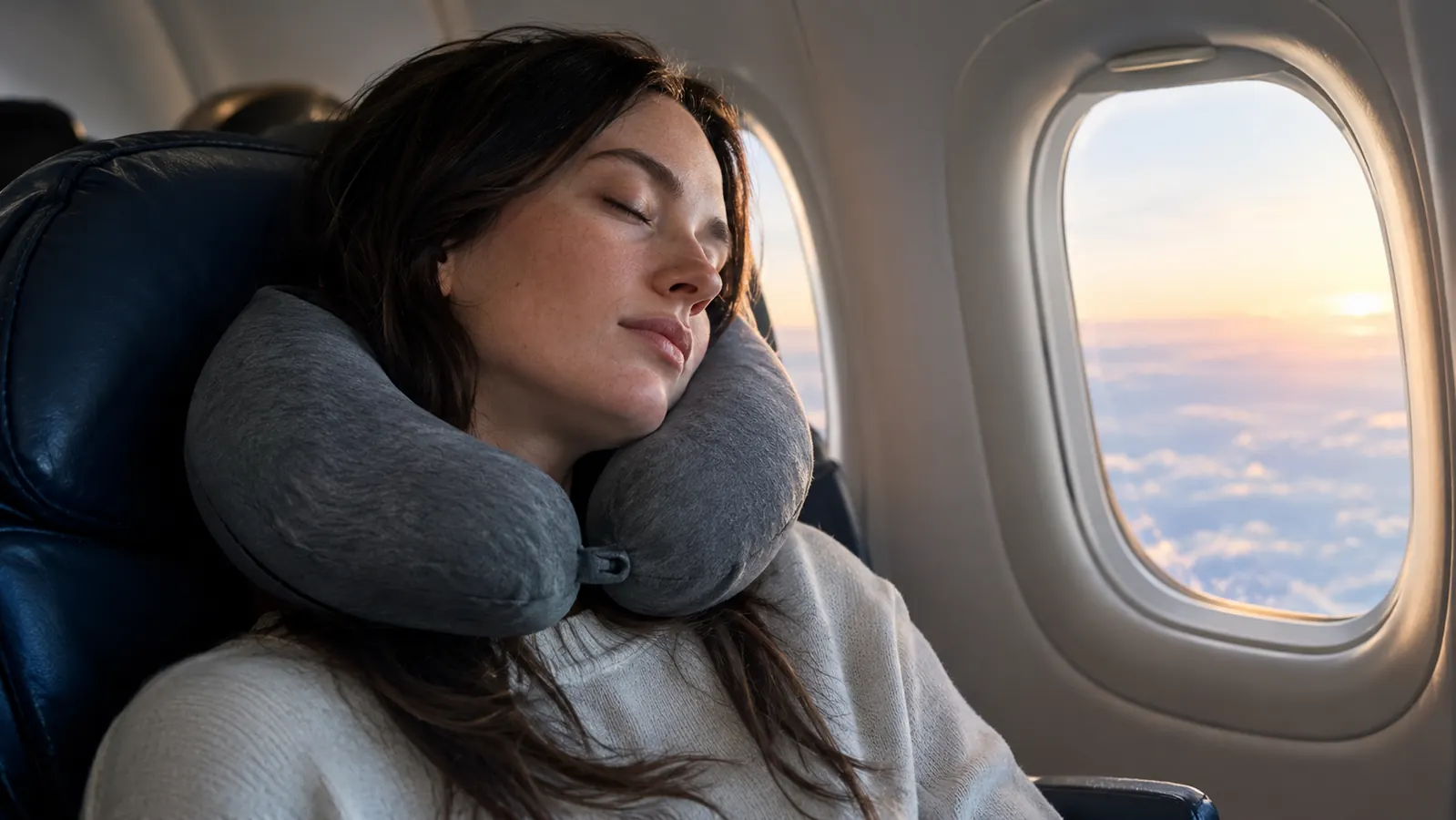
I teach geography, or I did for 28 years, so I have spent a lot of time thinking about how people get from one place to another. What I did not spend much time on, until recently, was how they sleep on the way. Then my husband Mark and I booked a red-eye to London, I woke up somewhere over Greenland with my neck at an angle no human neck should hold, and I decided it was time to take the travel pillow question seriously.
This review covers the napfun memory foam travel pillow, which I have now used on six flights including two red-eyes, a five-hour daytime haul, and one very cramped middle seat. I am a 54-year-old retired teacher from Denver, I fly out of DEN five or six times a year, and I have a bad left knee that makes me think about weight and bulk even when I am only carrying a backpack. Here is what I learned.
The Quick Verdict
The napfun memory foam travel pillow is the first one I have used that actually kept my head from falling forward on a red-eye. It is not magic, it takes up real space in a carry-on, and the clip closure is fiddly, but for the price it beats every inflatable I have tried.
Amazon Check Today's Price →The pillow I now pack for every flight over two hours
After six flights and two red-eyes, the napfun memory foam travel pillow is the one that stays in my carry-on. Check today's price on Amazon and see if it fits your travel style.
Amazon Check Today's Price on Amazon →How I've Used It
I have used the napfun pillow on six flights in the last five months. The first was a red-eye from Denver to London, which is the flight that made me buy it in the first place. The second was the return trip, also overnight. Then came a five-hour flight to New York, a shorter hop to Chicago, and two more long hauls that I will get to in a moment.
My routine is the same every time. I take the pillow out of my carry-on after boarding, wrap it around my neck with the taller side under my jaw, and clip it in front. On the red-eyes I also lean a small jacket against the window side for extra padding. On the daytime flights I mostly use it for reading, because it holds my head up better than the seat does.
I should be clear about one thing: I am a side sleeper at home, and I cannot fully sleep sitting up no matter what I put around my neck. What the napfun pillow does is keep my head from rolling forward and waking me up every twenty minutes. That is a smaller win than a full night of sleep, but on a red-eye it is the difference between arriving useless and arriving tired but functional.
Our first real test was a red-eye from Denver to Philadelphia to see our daughter. I usually spend those flights in a fog, jerking awake every time my head drops. With the napfun pillow snug around my neck and the closure fastened at the front, I slept for close to three hours in a row, which for me on a plane is close to a record. Mark, who sat next to me with a rolled-up jacket, was not impressed by his own night.
What Makes the napfun Pillow Different
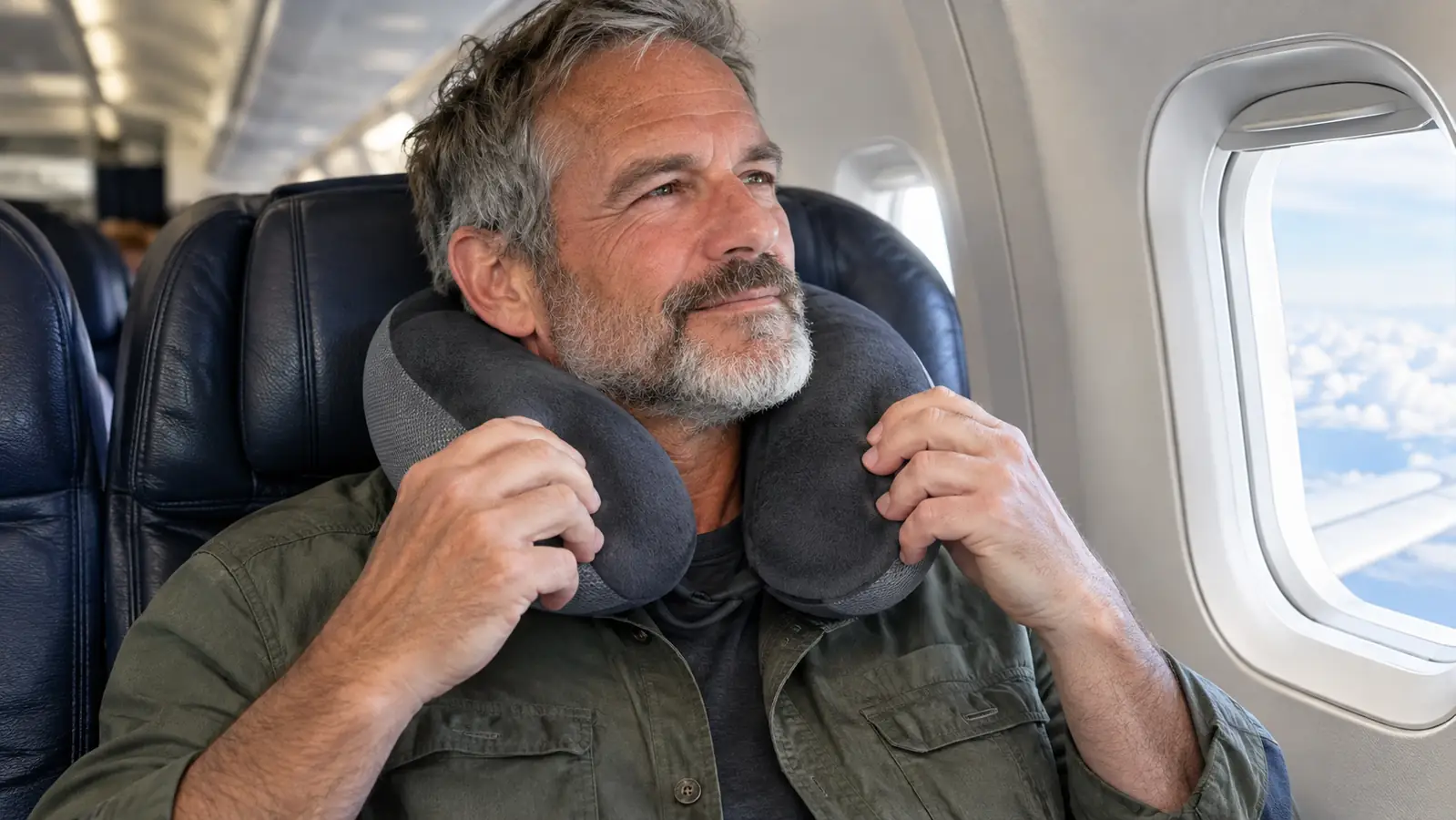
The napfun pillow is a U-shaped memory foam pillow with a taller section that sits under your chin and a shorter section at the back of your neck. That shape is the whole story. Most of the cheap pillows I have owned over the years are the same thickness all the way around, which means they push your head forward instead of holding it up. The napfun shape does the opposite: the tall front section gives your chin something to rest on, so your head stays where it should.
The memory foam is firm but not hard. When I first unpacked it, I was worried it would feel like a brick. It does not. It has a little give, it bounces back slowly, and after a few minutes it warms up and molds to the side of your face. On the London red-eye I fell asleep within about an hour, which for me is almost unheard of in a seat.
The cover is a soft knit that zips off for washing. I have washed mine twice, once after a long trip and once after a cold that left me suspicious of everything I owned. It came out fine both times, no pilling, no shrinkage, and the zipper still works. That matters to me because I have thrown away pillows before because the cover was not removable.
There is also a small pocket on the side of the pillow. I use it for earplugs and a sleep mask. It is not big enough for a phone, and I would not trust a phone in there anyway, but for the small things it is genuinely handy.
What makes the napfun pillow different from the cheap ones I had before is the memory foam itself. It is firm enough to actually hold my head up rather than squashing flat in the first hour. The front closure keeps it from riding up or sliding off when I shift, and the raised sides catch my head when it tips to the window. Those three things together are why it works when others did not.
How It Performed Over Time
The honest test of any travel pillow is not the first flight. It is the fifth, the tenth, the flight where you have already used it a dozen times and you are not being careful with it anymore. I am happy to report that the napfun pillow has held up well.
The memory foam has not gone flat. I was worried about this because I have owned foam pillows that started out plump and ended up the thickness of a pancake within a year. After six flights and five months of being stuffed into a carry-on, the napfun pillow still has the same shape it had on day one. The taller front section still holds my chin up, and the back section still supports my neck without pushing my head forward.
The cover has held up too. No loose threads, no thinning fabric, and the zipper has not snagged once. The clip closure on the front is the one part I have mixed feelings about. It is a plastic clip that you snap together, and it works, but it is a little stiff. I have to fiddle with it for a few seconds to get it lined up, especially when I am half asleep. It has not broken, and I do not think it will, but it is not the smoothest mechanism I have ever used.
One thing I have learned is that the pillow needs a few minutes to expand after being compressed. When I pack it, I roll it up and stuff it in my carry-on, and when I take it out on the plane it is a little flat. It puffs back up within about five minutes, but if you are the type of person who boards and immediately wants to sleep, you will want to take it out of your bag before you sit down.
Over several months the foam has kept its shape well. After a long trip it takes a little while to puff back up if it has been squashed in a bag, but by the next flight it is back to normal. I have washed the cover twice in cold water and air dried it, and it came out fine without shrinking. The fabric has picked up a little pilling on the side that rubs against the seat, but nothing worse.
After six flights and five months of being stuffed into a carry-on, the napfun pillow still has the same shape it had on day one.
The Tradeoffs You Should Know About
I want to be honest about the downsides, because every travel product has them and the ones that pretend otherwise are the ones you end up resenting. The biggest downside of the napfun pillow is that it takes up space. It is a memory foam pillow, which means it is not going to compress down to the size of a deck of cards like an inflatable. If you are a strict carry-on-only traveler who packs to the last cubic inch, this pillow will cost you real room.
The second downside is the clip. I mentioned it already, but it deserves its own mention: it is stiff, and it is the kind of thing that is harder to manage at 2 AM when you are half asleep and the person next to you is already dozing. It has never broken, but I have had to sit up and use both hands to get it clipped a few times.
The third thing is that it is not a cure-all. If you are a stomach sleeper, or if you simply cannot sleep sitting up no matter what, this pillow will not change that. What it will do is keep your head from rolling around, which means you will wake up less often and with less of a crick in your neck. That is a real benefit, but it is not the same as a bed.
The biggest tradeoff is bulk. Even rolled up and fastened to my bag, the napfun pillow takes up room, and on trips where I travel with only a small personal item I have had to choose between the pillow and a sweater. I clip it to the outside of my backpack, which works, but it is one more thing to keep track of in a crowded boarding line.
Who This Is For
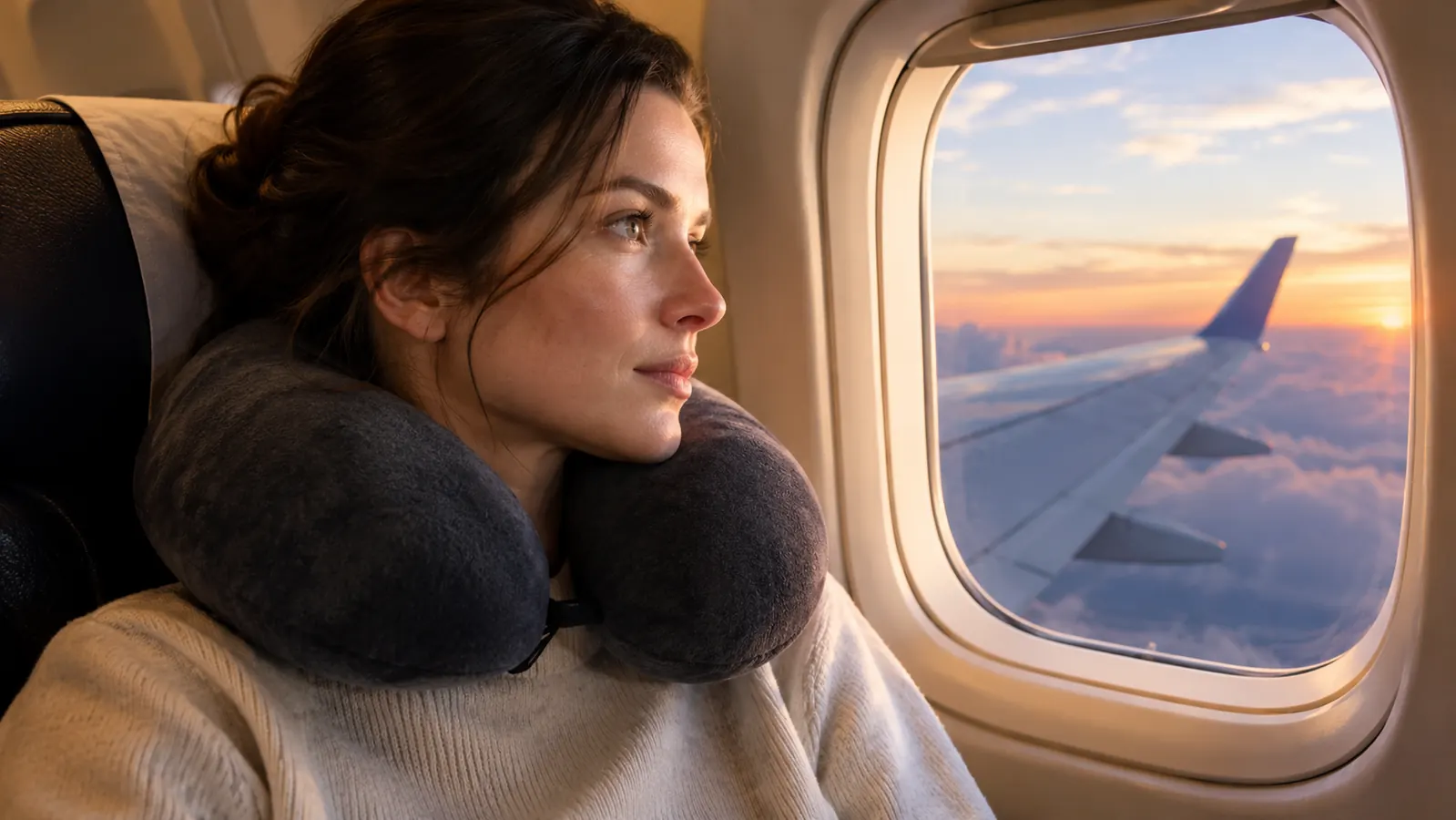
This pillow is for people who fly enough that a sore neck is a recurring problem. It is for the person who has tried the inflatable pillows and hated the way they feel like a pool toy. It is for the person who has tried the cheap foam pillows and hated the way they push your head forward. It is for the person who, like me, has woken up on a red-eye with their head in the aisle and decided that enough is enough.
It is also for people who care about the small comforts. The removable cover, the pocket for earplugs, the fact that it does not smell like a chemical factory when you first open it. These are the details that make a product feel like it was designed by someone who actually travels, and the napfun pillow has them.
The Honest Pros and Cons
What I Liked
- Firm memory foam actually holds your head up instead of flattening
- Front closure keeps it in place when you shift in your seat
- Raised sides catch your head when it tips toward the window
- Cover is removable and washes well in cold water
- Kept its shape through months of regular flights
Where It Falls Short
- Bulky to carry, even when rolled and clipped to a bag
- Feels warm on long flights in a stuffy cabin
- Takes a while to puff back up after being squashed
- Not much help if you prefer to sleep leaning forward
- Cover picks up light pilling where it rubs the seat
Taken together, the napfun pillow does the one thing I bought it for, which is let me sleep sitting up. The cons are mostly about carrying it and comfort in a warm cabin, and for me that trade is easy to make on any flight over three hours.
Who Should Skip It
If you are a strict minimalist who packs everything into a personal item, this pillow is probably not for you. The memory foam takes up space, and if you are not willing to give up that space, you are better off with an inflatable or with no pillow at all.
If you are someone who genuinely cannot sleep sitting up, no pillow will fix that, and you should not spend money on one expecting it to. And if you are the type of person who loses small things easily, the clip and the pocket are small enough that they could be a source of frustration rather than convenience.
If you are unsure, try it on your next long flight and judge it after the first hour, not the first five minutes. Memory foam needs a little warmth to settle, and the difference shows once it does.
The pillow that finally made red-eyes bearable
If you fly more than a couple of times a year and you are tired of waking up with a sore neck, the napfun memory foam travel pillow is worth a try. Check today's price on Amazon and see if it works for you.
Amazon Check Today's Price on Amazon →