
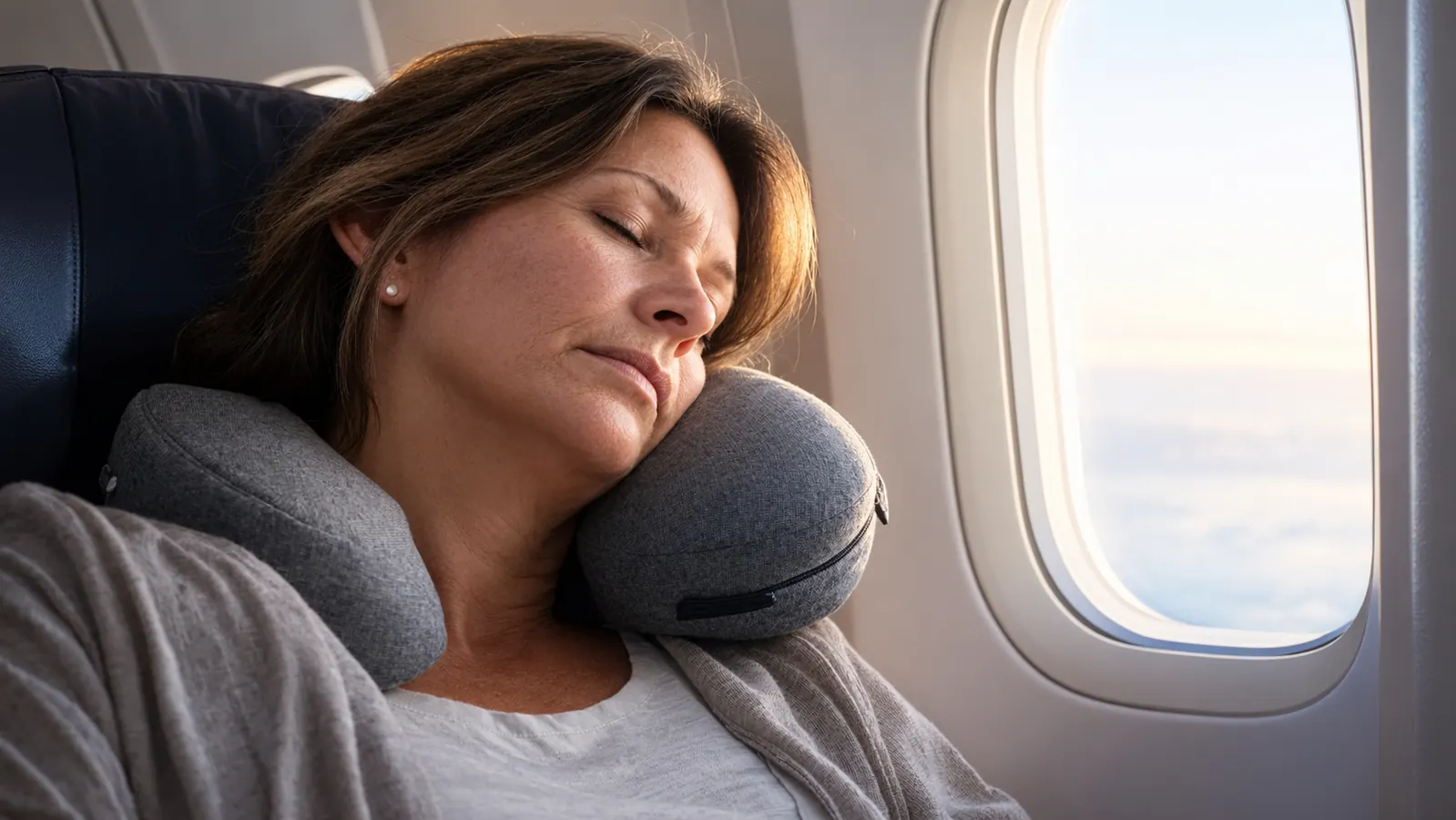
I have bought four travel pillows in the last six years. Three of them are in a drawer at home in Denver, and I keep meaning to donate them. The fourth is the napfun memory foam travel pillow, and it is the one I actually pack. That is not the same as saying it is perfect. It is not. But after six flights with it, including a red-eye to Frankfurt and a cramped regional hop to Bozeman, I have a clear picture of what it does well and what it does not. This is the honest version, the one I would give a friend over coffee before she spends her own money.
The Quick Verdict
The napfun memory foam pillow is the best travel pillow I have used, but it is not a miracle. It shines on long flights where you can lean against a window or bulkhead, and it is only so-so if you are stuck in a middle seat with nowhere to lean.
Amazon Check Today's Price →The pillow I actually pack for a long flight
After six years of trying inflatable pillows, beaded pillows, and cheap foam tubes, the napfun memory foam pillow is the one that makes it into my carry-on every time. It supports my neck without propping my head forward, and it packs flat enough that I do not resent it.
Amazon Check Today's Price on Amazon →How I Have Used It
I am Corinne Albrecht, a retired middle-school geography teacher, and I fly five or six times a year out of Denver International. My husband Mark, a retired electrician, thinks a rolled-up hoodie is a perfectly good travel pillow, so I do not get to borrow his opinion. I have tested the napfun pillow on a two-hour flight to Salt Lake City, a four-hour flight to Orlando, a nine-hour red-eye to Frankfurt, and a bumpy regional flight to Bozeman where the seat belt sign stayed on for most of the trip.
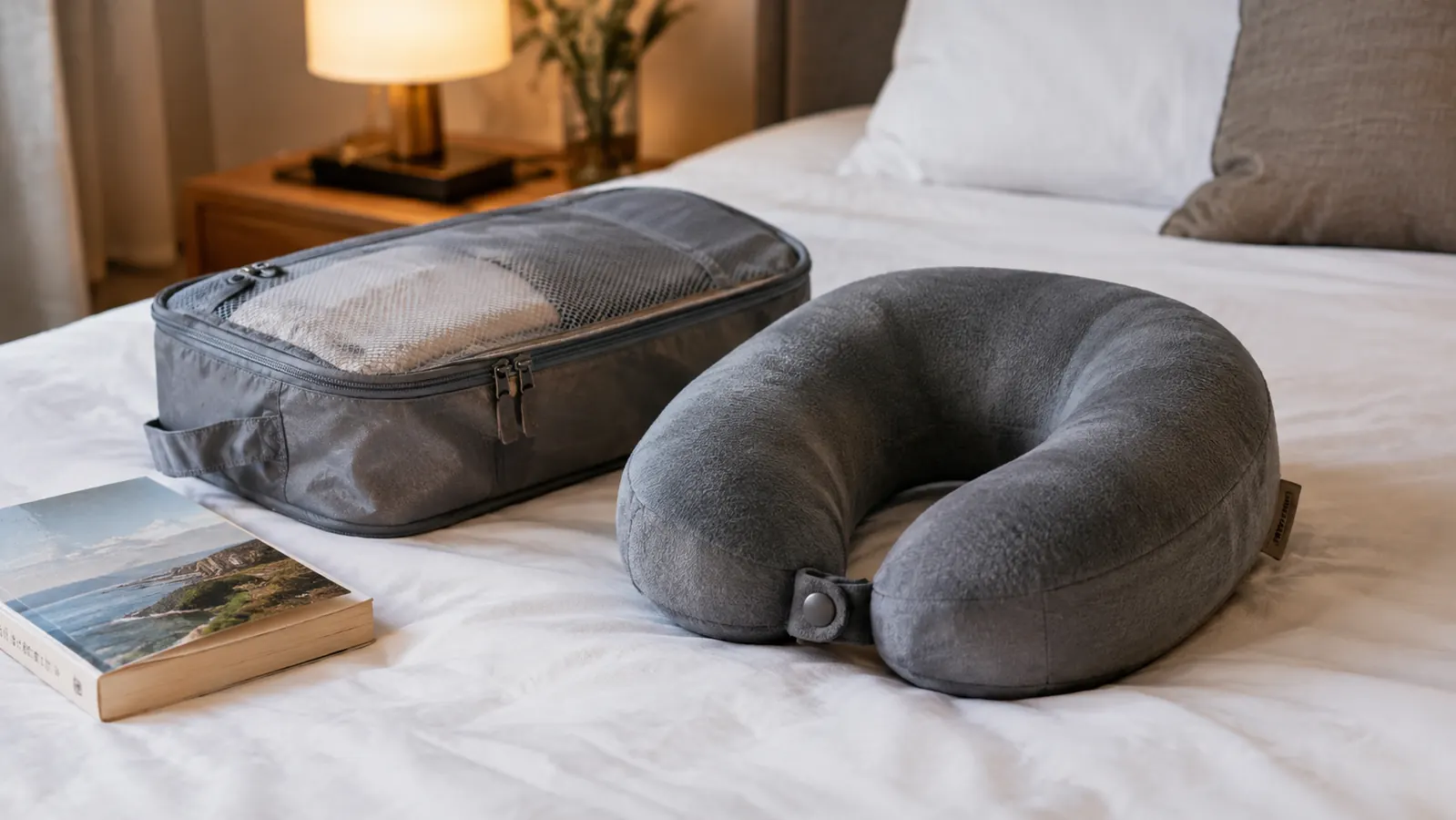
The pillow is a U-shape made of memory foam with a soft outer cover. You wrap it around your neck, and the thicker part sits behind your head. There is a snap in the front that lets you adjust how snug it fits. On the plane I usually leave the snap open because I like a little room to turn my head toward the window. Mark, who tried it once on a drive to the mountains, preferred it snapped closed.
The first thing I noticed is that the foam actually bounces back. My old foam pillow from another brand stayed squished in the middle after a few uses, like a pancake that had been sat on. The napfun pillow has held its shape through all the flights I have taken it on, and it still feels firm when I press it. That matters more than I expected. A travel pillow that goes flat is just a scarf with extra steps.
I bought the napfun pillow after one too many flights spent waking up with my head on Mark's shoulder or, worse, on a stranger's. Since then it has been on a red-eye to the East Coast, a long flight to Lisbon, two cross-country trips and a six-hour train ride. That is enough time to know what it does well and what it does not.
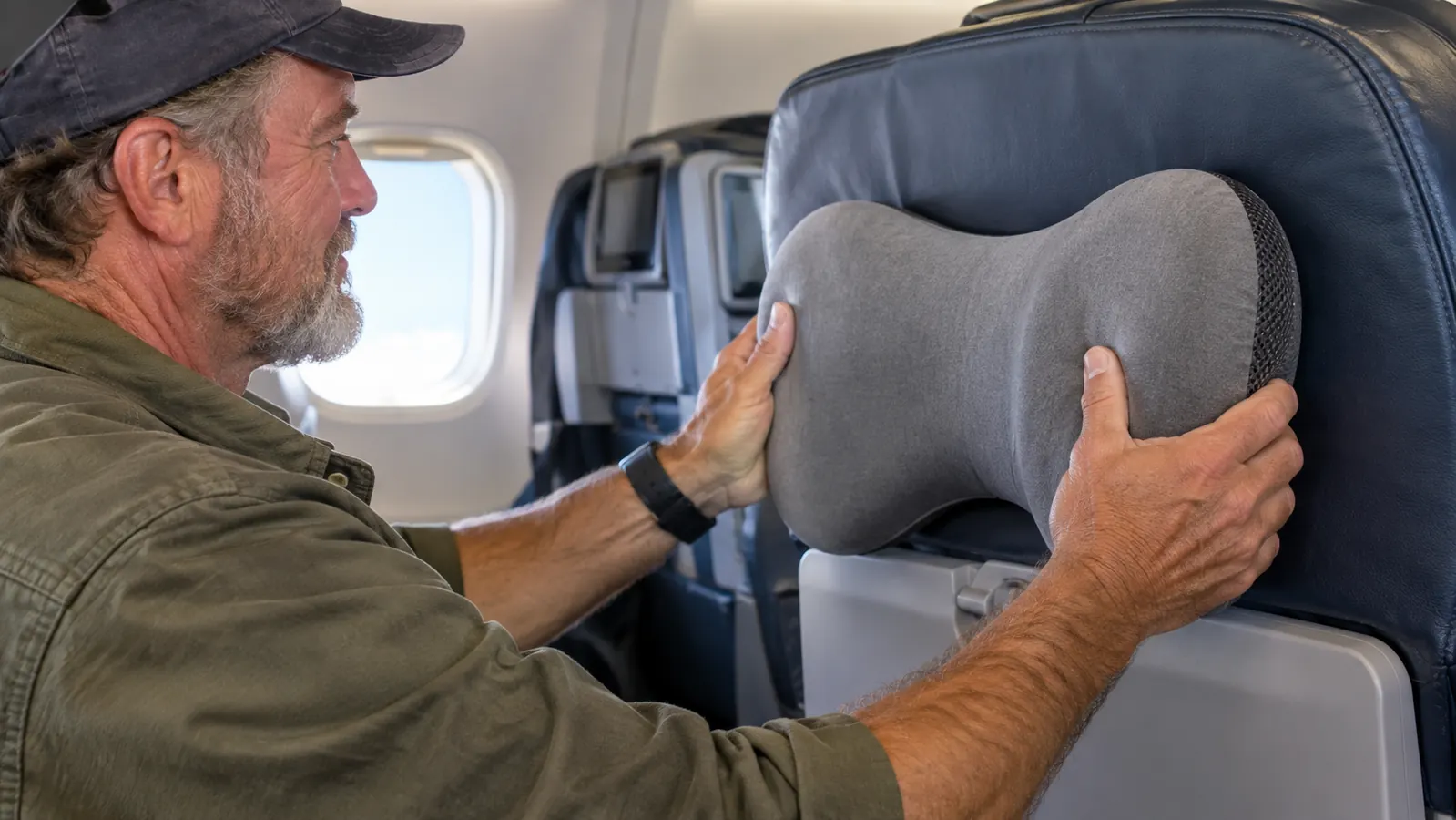
What Nobody Tells You About Memory Foam Travel Pillows
Here is the thing nobody puts in the product photos: a memory foam pillow only helps if you have somewhere to lean. On a window seat, it is wonderful. I can tilt my head against the window frame and the foam supports my neck instead of letting my chin drop to my chest. On an aisle seat with no one next to me, I can lean toward the empty seat. But in a middle seat, with strangers on both sides, the pillow mostly just holds my head in a neutral position while I try not to drool on anyone. That is not the pillow's fault. It is the geometry of coach seating.
The second thing nobody tells you is that the pillow is warm. Memory foam wraps around your neck and traps heat. On a winter flight to Orlando I was comfortable. On a summer flight to Denver in a stuffy cabin, I ended up holding the pillow in my lap for part of the trip. The cover is soft and removable, which helps, but it is not a cooling pillow. If you run warm, this is worth knowing before you buy.
The third thing is the packing reality. The napfun pillow does not compress into a tiny pouch like an inflatable one. It squishes down somewhat, and you can roll it or fold it, but it takes up a real chunk of a carry-on. I have learned to pack it last, on top of my clothes, and I use the space inside the U-shape to tuck a pair of socks or a charging cable. That trick makes the space feel less wasted.
The first thing nobody tells you is that memory foam pillows feel firm at first, almost too firm. The first time I put the napfun pillow on in the airport I wondered if I had made a mistake. Ten minutes later, warmed up and settled around my neck, it felt just right. Give it time before you judge it.
The second thing is that it is warm. Memory foam holds heat, and in a stuffy cabin I sometimes unfasten the front and let it sit loosely for a while. That is a small price for actual support, but it is worth knowing if you run hot.
A memory foam pillow only helps if you have somewhere to lean. On a window seat it is wonderful. In a middle seat, it is just holding your head in a neutral position while you try not to drool on anyone.
The Good, the Bad, and the Snug
Let me be specific about what I liked. The napfun pillow supports the back of my head, not just the sides of my neck. That is the difference between waking up with a stiff neck and waking up feeling like a person. On the Frankfurt red-eye, I slept for maybe four hours, which is more than I have ever slept on a plane. My neck did not ache the next day, and I did not have that foggy, crooked feeling I usually get after an overnight flight.
I also like the snap closure. Some travel pillows just hang there like a bagel around your neck. The snap lets me tighten it so it stays put when I shift in my seat. It is a small thing, but it makes the pillow feel like it was designed for actual sleeping, not just for looking like a traveler in a catalog.
Now the honest complaints. The pillow is bulkier than I would like. It is fine for a carry-on, but if you are the kind of person who packs a personal item to the brim, you will notice the space it takes. The cover is removable and washable, which is good, but the zipper is a little stiff the first few times. And the foam has a slight smell when it is new. It faded after a few days of airing out, but it was there.
One more thing: the napfun pillow is not a neck brace. It will not keep your head from falling forward if you are sitting bolt upright in a seat that does not recline. It needs a surface to lean against. On the Bozeman flight, the seat in front of me did not recline and the window was out of reach, so the pillow mostly kept my neck warm. That is a limitation, not a flaw, but I want you to know it before you buy.
On balance, the good outweighs the bad by a wide margin. The foam holds my head up for hours, the front closure keeps it from sliding off when I shift, and the cover has survived two washes without shrinking. The bad is mostly about size: it is bulky to carry and takes a while to puff back up after being squashed.
The snug part deserves its own note. The pillow fits closely around the neck, which is why it works, but if you have a larger neck or prefer a looser feel, you may find it a touch tight. For me it is just right, and Mark, who has a bigger neck, says it is fine once the closure is set on its loosest position.
How It Compares to What I Tried Before
I have a drawer full of travel pillow experiments, so I can compare honestly. The inflatable one packs tiny and is fine for a nap, but it feels like resting your head on a pool toy. The beaded one is cool and moldable, but it is heavy and it makes a sound like a maraca every time you turn your head. The cheap foam tube from a drugstore is basically a rolled-up towel with a zipper. The napfun pillow is the first one that made me think, oh, this is what a travel pillow is supposed to do.
It is also the first one Mark has not made fun of. He still will not use it, because he is a man who believes a jacket makes a fine pillow, but he stopped calling mine a neck donut. That is about as close to a compliment as I get from him.
Before the napfun pillow I used a soft microbead pillow and then an inflatable one. The microbead pillow felt lovely for about an hour and then flattened, so my head dropped anyway. The inflatable packed small but needed constant fiddling with the valve. The memory foam napfun pillow is bulkier than both but is the first one that kept me asleep for more than an hour at a time.
Who This Is For
This pillow is for people who fly enough that a good night's sleep on a plane actually matters. It is for window-seat people, bulkhead people, and anyone who has woken up from a flight with a crick in their neck and sworn they would never let it happen again. It is for side sleepers who can lean against a window, and for people who like a firm, supportive pillow rather than a soft squishy one.
It is also for people who, like me, have a bad left knee and prefer to book an aisle seat so they can stretch it out. The tradeoff is that an aisle seat gives you nowhere to lean. I have learned to book a window seat for flights over three hours and use the napfun pillow against the window. For shorter flights, I take the aisle and skip the pillow. Knowing the difference has made my trips better.
The Honest Pros and Cons
What I Liked
- Memory foam holds your head up for hours instead of flattening
- Front closure keeps it from sliding off when you shift
- Fits snugly so your head does not drop onto a neighbor
- Removable cover washes well in cold water
- Has kept its shape through months of flights and a long train ride
Where It Falls Short
- Feels very firm for the first ten minutes
- Holds heat in a warm cabin
- Bulky to carry, even rolled and clipped to a bag
- Snug fit may feel tight on a larger neck
- Needs time to puff back up after being packed flat
If you can live with the bulk, the napfun pillow is a genuine upgrade over the soft and inflatable pillows most people start with. I would buy it again.
Who Should Skip It
Skip the napfun pillow if you only fly once or twice a year and you are happy sleeping against a jacket. Skip it if you are a middle-seat person on a full flight, because the pillow cannot fix the fact that you have nowhere to lean. Skip it if you run hot, because memory foam is warm. And skip it if you are a strict carry-on minimalist who counts every cubic inch, because this pillow takes up space no matter how you pack it.
If any of those sound like you, an inflatable pillow or a rolled-up sweater is probably the better choice. There is no shame in that. I own both.
One more honest word about expectations. No travel pillow turns an economy seat into a bed. What the napfun pillow does is stop the head drop that wakes you every twenty minutes, and that alone can turn a miserable overnight flight into one where you get a few real hours of sleep. That is the realistic goal, and on that goal it delivers.
If you buy one, wash the cover before your first trip and fasten the closure at a comfortable setting at home, so you are not fumbling with it in a dark cabin. Little bits of preparation like that make the difference between a pillow you love and one you leave in the closet.
And if you share long flights with a partner, consider getting two. Mark borrowed mine for one leg of our trip to Lisbon, decided he liked it after all, and then would not give it back until we landed. I slept on a folded sweater for that flight, and I do not recommend it. A second napfun pillow is now on our packing list for every trip over four hours, right next to the passports and the chargers. Pack it last so it sits on top of your bag, ready to grab the moment you find your seat and settle in.
If you fly window seats, this is the pillow to try
The napfun memory foam pillow is not for everyone, but for window-seat travelers who want real neck support on long flights, it is the best I have found. It has held its shape through a dozen trips, and I keep packing it.
Amazon Check Today's Price on Amazon →